— Outfit builder · The wardrobe maths · Updated July 2026
Outfit builder.
Twelve compatible pieces build ninety outfits. Build yours from real clothes below — then see what the maths looks like on your own body.
Occasion & style are optional — tap to filter (tap again to clear). Generate uses your picks; Surprise me ignores them for a random look.
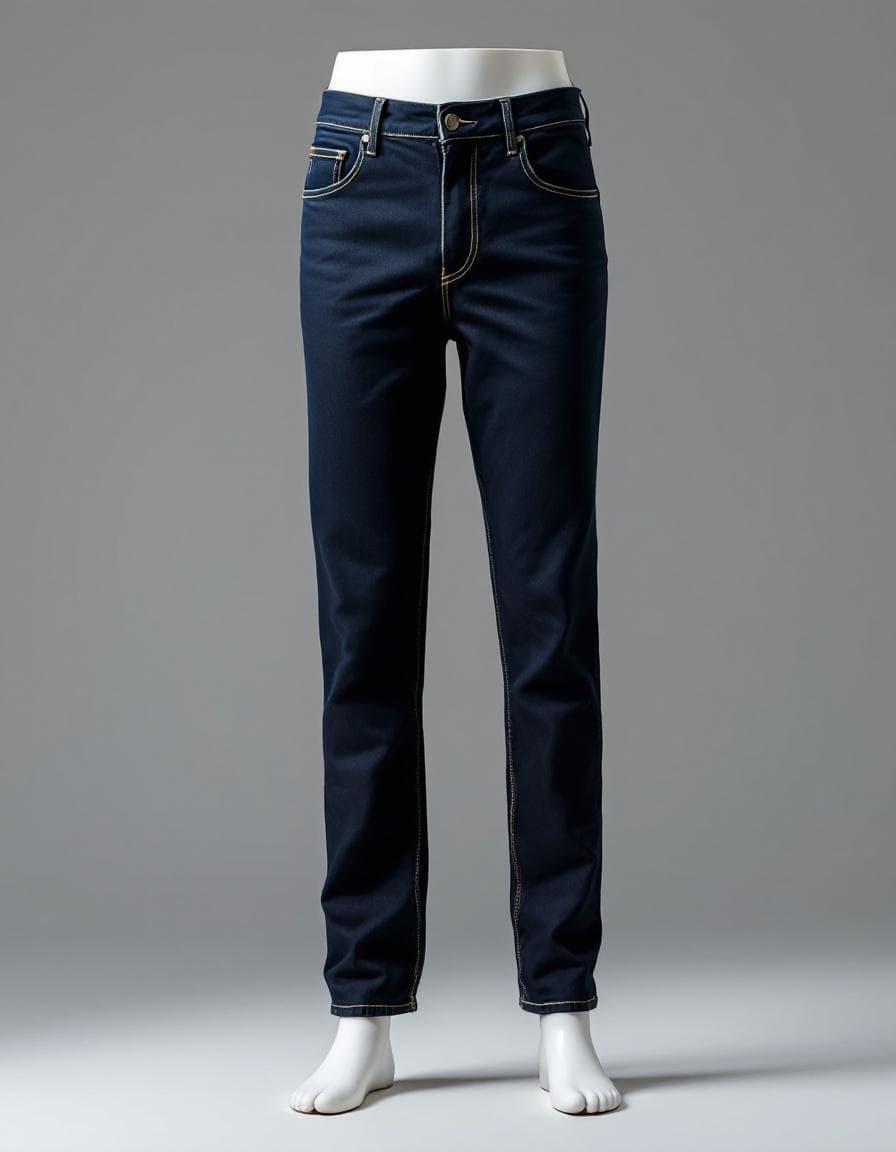
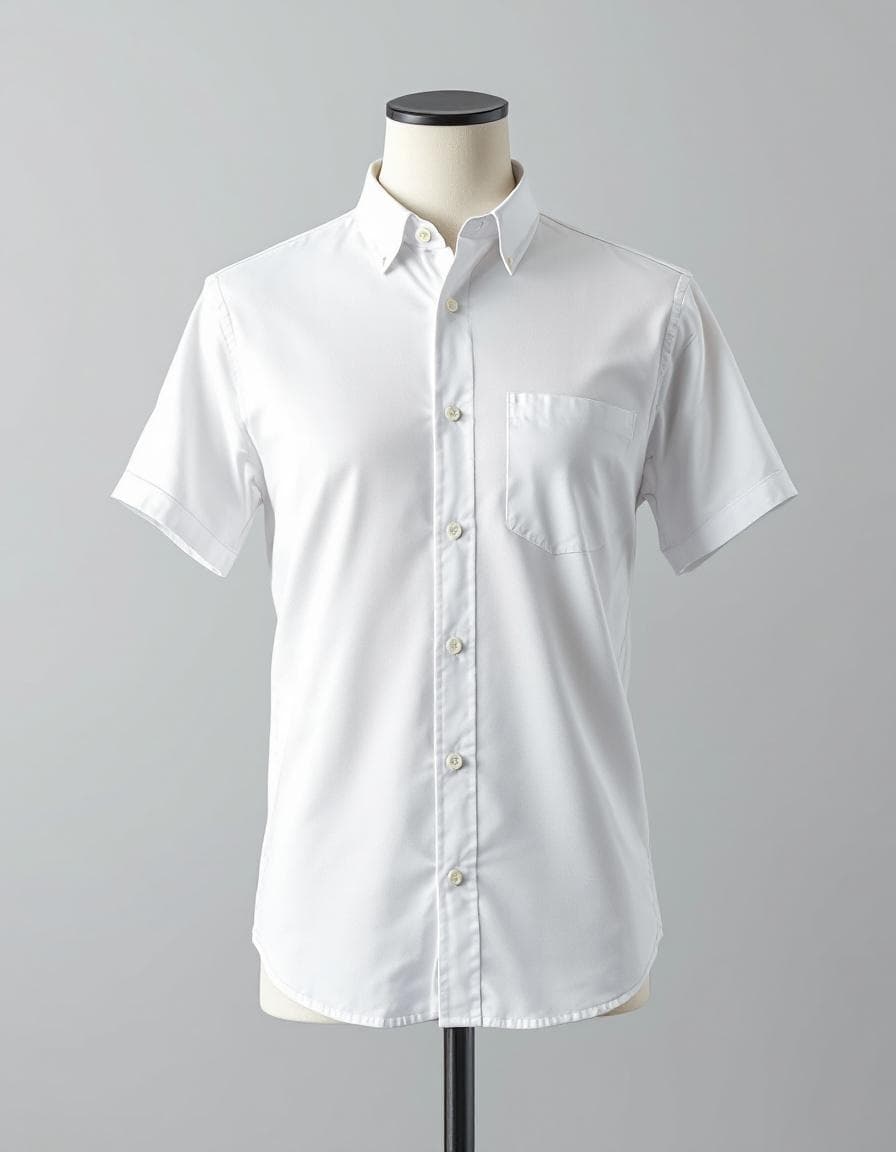
Dark wash jeans with White Oxford shirt
Black or white against navy, charcoal or slate is as clean as contrast gets — cool undertones on both sides, so nothing competes.
Real, in-stock pieces from real brands. The generator is free — the photorealistic try-on gives you one free render, then it's Pro.
The maths: 12 pieces, 90 outfits
The argument for building a wardrobe rather than accumulating one is arithmetic, and it is worth doing slowly because the result is genuinely counter-intuitive.
5 tops × 3 bottoms × 2 shoes = 30 base outfits
30 × 3 layer options (none · chore coat · overshirt) = 90 outfits
Ninety distinct, wearable outfits out of twelve garments — roughly three months of not repeating yourself. And notice which slot does the heavy lifting: the two outer layers add only two items but triple the total, because a layer multiplies rather than adds. This is why a well-chosen chore coat is worth more to a wardrobe than a fifth pair of jeans.
The catch is the word compatible. The multiplication only holds if every top works with every bottom and every shoe. The moment one item pairs with only half the grid, you are no longer multiplying — you are adding, and adding is how people end up with a full wardrobe and nothing to wear.
The 12-piece core, slot by slot
This is a men's core that actually multiplies — every piece was chosen for how many things it works with, not for how good it looks alone. Swap the colours to your palette; keep the structure.
Dark denim · stone chinos · charcoal wool trousers
Three formality levels in three trousers. Every top below works with all three, which is what makes the multiplication hold.
White Oxford · light-blue Oxford · white tee · navy knit · grey sweatshirt
Two shirts carry the smart end, the knit bridges, the tee and sweatshirt carry the casual end. No patterns, so nothing fights.
Chore coat · overshirt
The multiplier. Each base outfit can be worn bare, under the chore coat, or under the overshirt — one slot that triples the wardrobe.
Brown leather boots · white leather sneakers
One dresses up, one dresses down, both go with all three bottoms. Shoes are where most wardrobes create orphans.
Why the real number is lower than the maths — and that's fine
Raw combinatorics overstates the truth, and it is worth being honest about that. The catalogue this builder draws from holds 55 men's pieces. Multiplied naively, that is tens of thousands of permutations. The number of combinations that actually pass the formality and palette rules — that a person could wear without looking like they got dressed in the dark — is 819.
That gap between the theoretical number and the wearable one is the entire job. Anyone can multiply. The value is in the filter: knowing that the sweatshirt doesn't go under the blazer, that the boots kill the linen trousers, that three mid-tones in one outfit reads flat. Every combination the builder can hand you has already survived that filter.
Browse the surviving combinations directly — every pairing has its own page explaining why it works — men's outfit pairings or women's outfit pairings.
Build around anchors, and never buy an orphan
A practical building rule that has survived contact with a lot of wardrobes: never buy a garment that doesn't already pair with at least three things you own. Not three things you plan to buy — three things hanging up right now. An orphan piece is not merely useless; it is actively expensive, because it takes up the mental space of a real option while contributing nothing to the multiplication.
The corollary is that the best purchase is rarely the most exciting one. A second pair of trousers in a neutral you already wear will unlock more outfits than a beautiful jacket in a colour that fights your shoes. Build the grid first; buy the personality pieces once the grid holds.
When you are ready to go from a 12-piece core to a full year-round wardrobe, the men's capsule wardrobe guide is the long version of this page, and the women's guide does the same the other side.
Frequently asked questions
What is an outfit builder?
An outfit builder works from the wardrobe up rather than the outfit down. Instead of handing you one look at a time, it treats your clothes as a grid — tops against bottoms against layers against shoes — and shows you what that grid can actually produce. The useful output isn't a single outfit; it's the realisation that the eleven things you own combine into far more looks than you were wearing, or that one missing piece would unlock a dozen.
How many outfits can you build from 12 pieces?
Ninety, with a well-chosen twelve. Five tops, three bottoms and two pairs of shoes multiply to 30 base outfits (5 × 3 × 2), and adding two optional outer layers triples that to 90, because each base outfit can be worn with no layer, layer A, or layer B. That arithmetic is the entire argument for a capsule wardrobe — but it only holds if every piece is compatible with every other, which is exactly what most wardrobes get wrong.
Is there a free outfit builder website — and is there an app?
This is a free website, no signup and no card, and on a phone it behaves like an app if you add it to your home screen. There's no download because there doesn't need to be one: the builder runs in the browser, and skipping the install also skips the part where an app demands you photograph your whole wardrobe before it becomes useful.
How do I build outfits for men specifically?
Set the builder above to men and it draws only from the men's catalogue. The men's core that does the most work is narrower than people expect: dark denim, stone chinos, wool trousers as the three bottoms; white and light-blue Oxford shirts, a white tee, a navy knit and a grey sweatshirt as the tops; brown leather boots and white leather sneakers as the shoes; a chore coat and an overshirt as the layers. That is twelve pieces and it covers casual through business casual without a single dead item.
Why does my wardrobe hold fewer outfits than the maths says?
Because the maths assumes every piece works with every other, and yours almost certainly contains orphans — a jacket that only goes with one shirt, a bold-patterned trouser that goes with nothing. Every orphan collapses the multiplication instead of extending it. The single highest-return wardrobe habit is refusing to buy anything that doesn't already pair with at least three things you own.
What's the difference between an outfit builder and an outfit maker?
Scope. An outfit maker answers "what do I wear today" — one outfit, right now. A builder answers "what can this wardrobe do" — the whole combination space, and which piece is missing from it. Use the maker in the morning; use the builder before you spend money.