— The AI outfit generator · Updated May 2026
AI outfit generator for clothes that actually exist.
Most AI outfit generators output beautiful images of clothes you can't buy. This one outputs real outfits — pulled from a curated capsule wardrobe of real garments from real brands. Upload one photo. Try it on. Decide. Buy.

Occasion & style are optional — tap to filter (tap again to clear). Generate uses your picks; Surprise me ignores them for a random look.
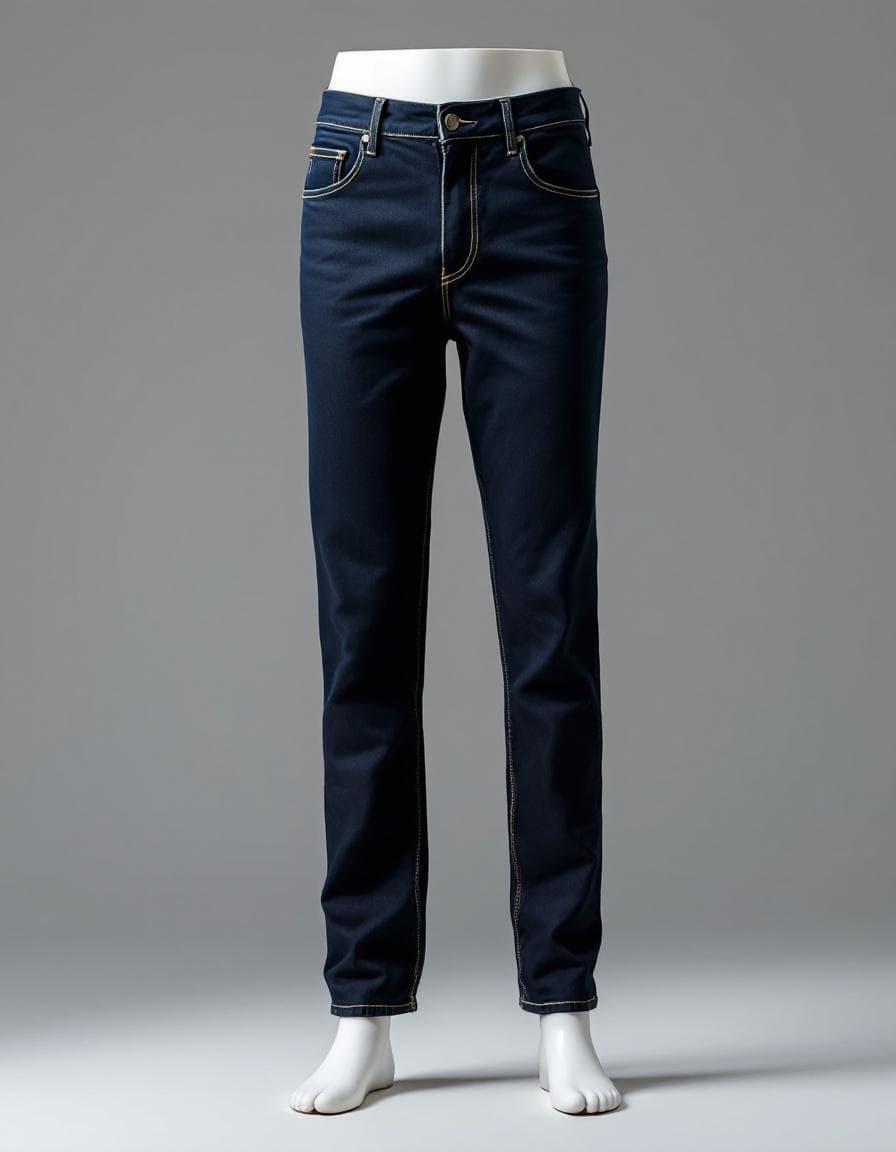
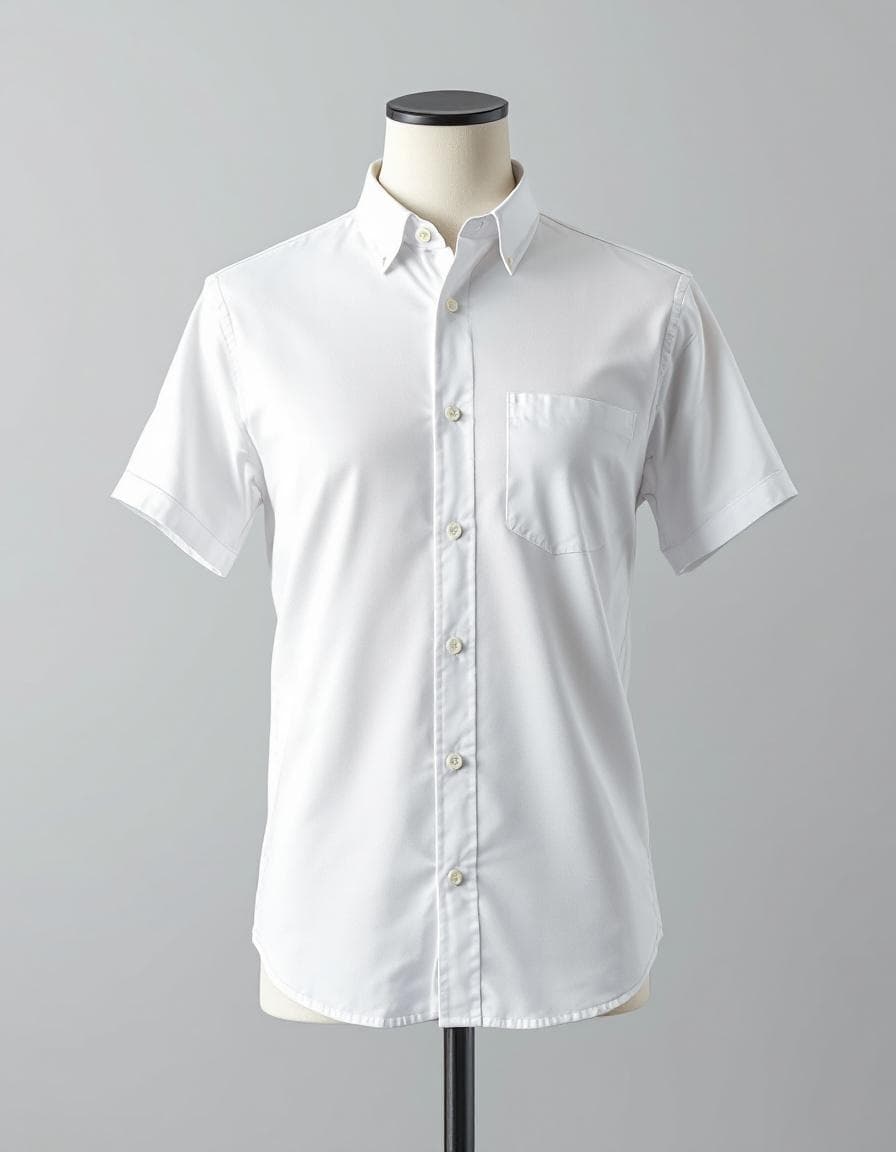
Dark wash jeans with White Oxford shirt
Black or white against navy, charcoal or slate is as clean as contrast gets — cool undertones on both sides, so nothing competes.
Real, in-stock pieces from real brands. The generator is free — the photorealistic try-on gives you one free render, then it's Pro.
Already subscribed? Sign in to access your Pro account.
Watch it build an outfit (16 seconds)
Pick a vibe, generate, and see a complete outfit from real, in-stock garments — one take, no cuts.
What is an AI outfit generator?
An AI outfit generator is a tool that uses generative AI to suggest or visualise complete outfits. The cheapest variants list outfit ideas as text — top + bottom + shoes — without visualising anything. The mid-tier ones generate AI-rendered images of imaginary clothes (great for inspiration boards, useless for shopping). The good ones do three things at once: suggest combinations that actually work together, visualise them on you, and build from real, in-stock garments from real brands.
That third leg — the real-clothes part — is where most AI outfit generators fall apart. It's much easier to generate a beautiful AI image of a "stylish autumn outfit" than to constrain the generator to garments that exist on Amazon or Mr Porter right now in your size. Capsule Wardrobe AI's outfit generator constrains itself — the inventory is curated, the garments are catalogued, and every output is built from real, currently-available products from real brands.
The result: a tool that's actually useful for the thing most people want from an AI outfit generator — to stop buying clothes that don't suit them and to stop owning clothes that don't combine.
How the AI outfit generator works
Four steps. The first three take ~30 seconds. The fourth runs as long as you want it to.
01
Upload one photo of yourself
A full-body photo works best. We process it in-memory, send it to the AI try-on engine, and discard it after the generation completes. No training data harvesting, no cloud storage, no facial fingerprinting.
02
Browse a curated capsule of real garments
Every piece in the library is a real garment from a real brand, selected by the editorial team. Anchors first — the must-have white Oxford, navy crewneck, dark jeans — then the variety pieces that multiply your outfit count.
03
Tap a piece, see yourself wearing it
Our AI outfit generator runs a fashion-trained 864×1296 photorealistic model. ~10 seconds per generation. No cartoonish render, no awkward warps — AI that knows how a navy crewneck actually drapes.
04
Add to wardrobe. Watch outfits unlock.
Each piece you accept multiplies with the rest. 5 pieces = 8 outfits. 12 pieces = 40. 30 pieces = 100+. The capsule HUD shows the math live.

How it compares to other AI outfit generators
The AI outfit generator space has multiplied since 2024. Most tools optimise for one of three jobs — concept ideation, virtual try-on, or shopping suggestions — and miss the other two. Here's the honest comparison:
FitRoom
CompetitorWhat it does: AI try-on demo, single garment at a time
What it misses: No curation, no capsule, generates outfits on stock-model bodies you don't recognise
Krea
CompetitorWhat it does: AI image generation that includes fashion outputs
What it misses: Generates AI-fantasy clothes that don't exist — you can admire the result, you can't buy it
thenewblack.ai
CompetitorWhat it does: AI outfit ideation for designers
What it misses: Designer tool, not a consumer-shopping tool — outputs are conceptual AI images, not real clothes
Pronti
CompetitorWhat it does: AI outfit suggestions from your closet photos
What it misses: Works with what you already own — no path to discover and buy new pieces
Outfitly / Dressly
CompetitorWhat it does: AI style assistants on phone
What it misses: Catalogue-light, women-skewed, no try-on visualisation
Capsule Wardrobe AI
What you're readingWhat it does: AI outfit generator + photorealistic try-on + real, curated capsule, in one flow
What it misses: currently menswear-first; womenswear catalogue is curated but smaller; footwear try-on is in the next release
Why an AI outfit generator with real clothes wins
Decision fatigue is the actual problem
Most AI fashion tools try to solve creativity (generate beautiful outfits). The real problem most people have is decision fatigue — they own a closet, they get dressed, they don't like the result. A capsule-constrained AI outfit generator solves that by making the inventory smaller and the combinations explicit.
Try-before-you-buy reduces returns
Online apparel returns hover at 30–40%. The single biggest reason: the garment doesn't suit the body. AI try-on on every individual piece cuts the return rate dramatically — you decide based on a photo of you wearing the piece, not a stock model.
Real clothes, not AI fantasies
Every piece is a real garment from a real brand — something that exists in the world, that you can recognise and find for yourself. Generators that output AI-fantasy clothes give you a pretty picture you can't act on.
Capsule = compounding outfits
Five well-chosen pieces produce 8 outfits. Twelve pieces produce 40. Thirty produce 100+. The math is multiplicative, not additive. An AI outfit generator that builds toward a capsule (rather than dressing you randomly) gets exponentially more useful with every piece you accept.
What the AI outfit generator can't do (yet)
- Generate footwear try-ons. Footwear has different geometry than torso and legs; we're shipping a separate model.
- Adjust for fabric weight and seasonality automatically. You still pick whether you want wool or linen — the generator doesn't infer climate yet.
- Replace a personal stylist for high-touch events. For weddings or executive role transitions, a human stylist still wins.
- Show what an outfit looks like in motion. The output is a still photo, not a video. Watch this space.
Get the AI outfit generator weekly
One email a week — new pieces, new recipes, new try-ons. No spam, no fluff.
No spam. Unsubscribe anytime.
Frequently asked questions
What is an AI outfit generator?
An AI outfit generator is a tool that uses generative AI to suggest or visualise complete outfits — usually combining a top, bottom, optional outerwear, and footwear. The best AI outfit generators do two things at once: they suggest combinations that work together, and they show you the outfit visually (either on a model, on you, or as an AI-rendered image). The cheapest variants only do one of those — they list outfits as text without visualising, or generate AI-fantasy images of clothes that don't exist.
How is this AI outfit generator different from FitRoom, Krea, or thenewblack.ai?
Three differences. First: every garment in this AI outfit generator is a real, curated, currently-available product from a real brand — not an AI fantasy. Tools like Krea generate AI-fantasy clothes that look great in the rendering but don't exist as products. Second: the outfits are tied into a coherent capsule wardrobe (30 curated pieces that all work with each other), so the AI isn't just dressing you randomly — it's building toward a complete, mix-and-match wardrobe. Third: the visualisation runs on a fashion-trained 864×1296 photorealistic model — the same calibre of try-on tech major retailers use — so the rendered output is sharp, fashion-accurate, and shows you (your body, your photo) wearing the garment, not a stock model.
Can the AI outfit generator suggest outfits without a photo of me?
Yes — but the magic of the tool is the photo-based try-on. Without a photo, you still get curated outfit recipes (top + bottom + outerwear combinations from a real capsule wardrobe), each with its styling rationale and the real brand it's from. With a photo, you also see yourself wearing every piece before you decide. Most users upload a photo within the first 30 seconds because the visual feedback is what makes the tool stick.
Is the AI outfit generator free?
The first try-on is free, no signup, no credit card. Browsing the curated capsule wardrobe and reading every piece's styling rationale is free indefinitely. Beyond your free try-on, the Pro tier is $14/month and unlocks 50 try-ons a month, the outfit recipes view (every combination from your accepted pieces), and capsule export.
What types of clothes work in the AI outfit generator?
Currently optimised for menswear: tops (Oxford shirts, sweaters, T-shirts, polos, henleys, denim shirts, turtlenecks), bottoms (jeans, chinos, dress trousers, shorts), and outerwear (blazers, overcoats, bombers, denim jackets, leather jackets). Footwear and accessories are catalogued but try-on is currently disabled for those categories — a separate footwear AI is coming. Womenswear is curated and live; the catalogue grows weekly.
Does the AI outfit generator use my photo to train models?
No. The photo is sent to our AI inference endpoint, processed for a single try-on, and discarded. Nothing is retained on our servers. Nothing is added to a training set. Our privacy policy says exactly this — see the privacy page for the technical detail, including the named third-party processor (legal disclosure).
How accurate is the AI outfit generator's try-on rendering?
The underlying model is fashion-trained, which means it understands how garments actually drape: the way a navy crewneck sweater bunches differently than a cotton T-shirt, the way an unstructured blazer sits on the shoulder versus a structured one, the way denim creases at the knee. The output is good enough that for the high-stakes pieces — blazers, overcoats, dress trousers — you can confidently decide whether the cut works on your body before clicking buy. For T-shirts and the simplest layering pieces, just buy them.
Can the AI outfit generator replace a personal stylist?
For most use cases — building a competent everyday wardrobe, deciding whether a piece works on your body, learning what colour palettes actually combine — yes. For high-touch personal styling around a specific event (wedding, gala, the start of a new executive role), a real stylist who knows your full life context still wins. The AI outfit generator covers the 80% case very well at a fraction of the cost.
Your photo is processed in-memory for a single try-on and discarded immediately after. We never train models on user images. See the privacy policy for the technical detail.