Capsule wardrobe for journalists
Credible everywhere. Camera-ready always. Packs in a carry-on.
What makes this wardrobe different
Not every capsule wardrobe works for every job. A journalist's wardrobe has specific requirements that a generic capsule ignores.
The 4 rules for this wardrobe
Camera-ready always
Even print journalists get pulled in front of cameras unexpectedly. Avoid busy patterns, bright logos, and white-white shirts (they blow out on video). Solid navy, grey, or earth tones read cleanly on any background.
Credible in any environment
From a boardroom to a protest to a crime scene — the journalist capsule needs to read authoritative without being overdressed for any situation. A quality leather jacket and Oxford shirt combo travels everywhere.
Pockets that work
Field reporting requires functional clothing. Jackets with inside pockets for notebooks, shirts that hold a pen, trousers with actual pockets.
Pack-able
News breaks anywhere. Everything in the capsule should fold into a carry-on, un-wrinkle on hanging, and be ready in 10 minutes.
The actual wardrobe
12 real pieces, every one chosen specifically for a journalist. Click any piece to shop on Amazon.

White Oxford shirt
The single most versatile shirt in any wardrobe. Layers under a sweater, tucks into chinos, untucks with denim.
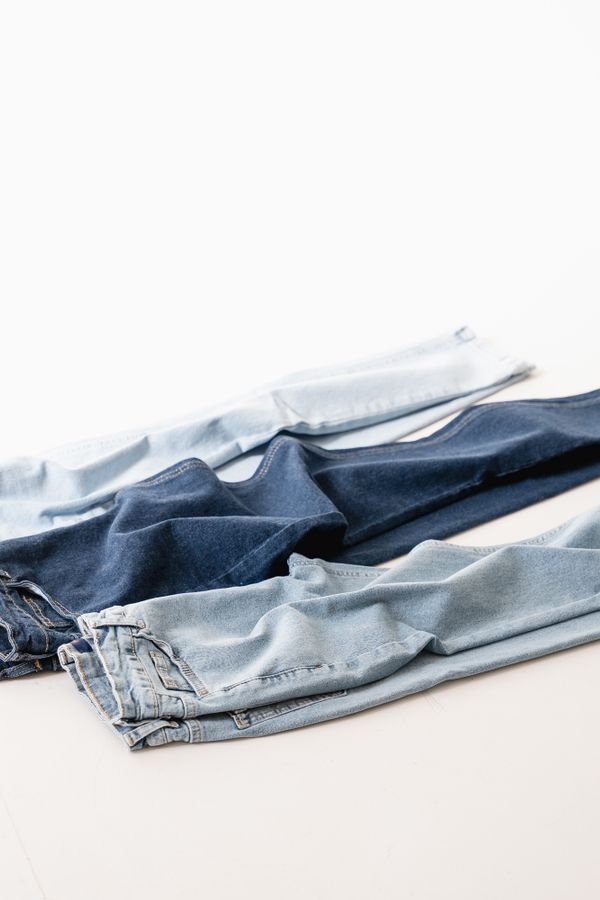
Dark wash jeans
Slim, not skinny. Dark stonewash reads smart enough for office Fridays and casual enough for bars.

Leather jacket
Cafe-racer or moto cut. Black or dark brown. No fast-fashion PU.

Navy crewneck sweater
Merino regulates temperature, layers over Oxfords, pairs with everything below the waist.

Khaki chinos
The warm-weather workhorse. Sand, beige, or stone — anything but bright tan.

Chelsea boots
Mid-brown suede or leather. Bridges dark jeans and wool trousers without missing a beat.
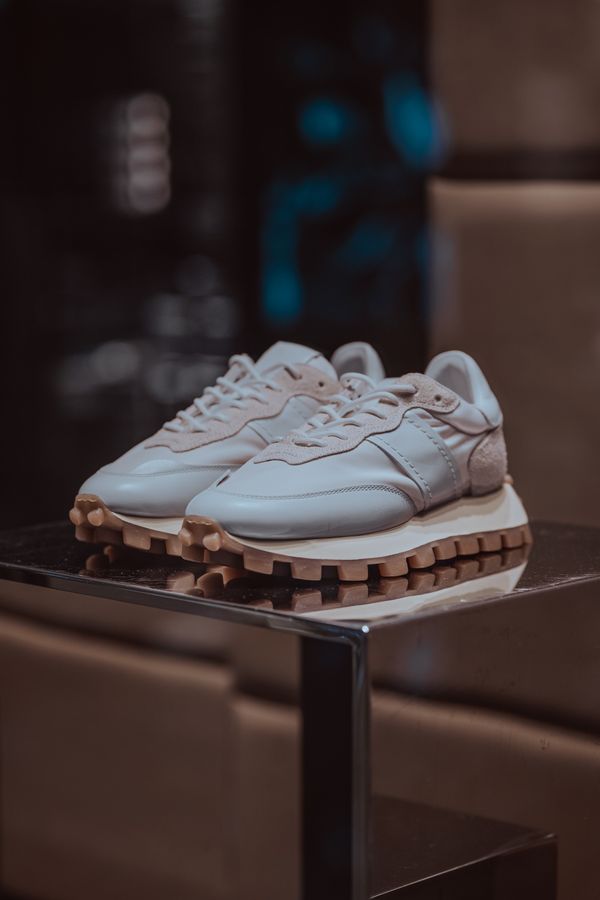
White leather sneakers
Low-profile silhouette, genuine leather. Wear with everything from chinos to jeans.

Trench coat
The all-weather workhorse. Khaki or navy.
Field watch
38-40mm dial, NATO strap, indiglo.
Weekender duffel
Waxed canvas, leather trim. Replaces three single-use bags.

Navy blazer
Unstructured shoulder = wears like a cardigan, dresses up like a suit jacket.

Polo shirt
Solid colours only. Skip logos. Knit collar holds its shape better than woven.
“You learn fast in this job: the camera sees everything. Narrow stripes create moiré on broadcast. All-white blows out. I always wear solid neutrals and I keep a blazer in every bag I own. When the camera shows up, you have about ninety seconds. The blazer buys you authority you haven't had time to earn yet.”
— Investigative reporter, national outlet
A typical week
How to rotate the wardrobe Monday through Friday without repeating yourself.
Monday
On-camera day: the leather jacket over an Oxford reads credible and documentary-appropriate.
Tuesday
Press event: smart-casual photography-friendly outfit.
Wednesday
Travel day: comfortable, neat, packable trench for airport and arrival.
Thursday
Broadcast segment or panel: blazer is the visual shorthand for authority.
Friday
Field reporting: functional, credential-ready, no dry-clean-only pieces.
Edge cases
The dress code decisions that trip up most journalists.
Live broadcast or TV segment
Solid colours only — no fine stripes, no herringbone, nothing with a tight repeat that creates moiré on screen. Navy, forest, camel, and charcoal read consistently well on camera. Avoid all-white and all-black.
Protest, crime scene, or conflict zone reporting
Dark, functional, no dry-clean-only anything. Chelsea boots or quality lace-up boots with closed toes. Avoid anything with logos or political associations.
Embedded corporate or government press event
Blazer required — you need to read as a peer to the communications professionals managing access. A navy blazer over an Oxford is the non-negotiable upgrade.
International travel and reporting
The wardrobe must carry on. Merino shirts, quality chinos, Chelsea boots, and a packable trench fit in a 20-litre carry-on with room for equipment.
Real budget breakdown
Piece-by-piece costs at budget, mid-range, and premium — so you know exactly what you're committing to.
| Piece | Budget | Mid | Premium |
|---|---|---|---|
| White Oxford shirt | $40 | $90 | $200 |
| Dark jeans | $40 | $90 | $200 |
| Leather jacket | $100 | $350 | $1200 |
| Navy blazer | $100 | $250 | $700 |
| Chelsea boots | $80 | $200 | $600 |
| Trench coat | $100 | $280 | $900 |
| Field watch | $80 | $200 | $800 |
| Weekender bag | $60 | $150 | $600 |
| Total | $600 | $1610 | $5200 |
What to avoid
- ✕
Fine stripes or herringbone patterns on camera — they create visual distortion (moiré effect)
- ✕
Bright logos on field work — they can be mistaken for sponsorship or alignment
- ✕
Anything requiring ironing in the field — wrinkle-resistant fabrics are non-negotiable
- ✕
High heels in any field context — stable footing is a safety issue, not an aesthetic choice
- ✕
All-white shirts on TV — they blow out in any broadcast lighting setup
Body in motion
Field journalism involves rapid transitions from seated (cars, planes, press boxes) to standing (filming, walking, running to a scene). Clothing that restricts movement — stiff denim, un-stretch trousers — becomes a physical constraint in breaking-news scenarios. Chelsea boots with a rubber sole provide ground feel and grip during fast movement on mixed urban terrain.
Early career vs. seasoned
Early career
A quality leather jacket and a navy blazer are the two pieces that define your on-camera credibility before your byline does. Buy one quality version of each and wear them constantly — they improve with age.
Seasoned
Your wardrobe has been through things. The beat-in leather jacket that's survived three war zones or a decade of crime scenes has a credibility no new garment can manufacture. Invest in longevity over trend.
Fabric & care
The journalist wardrobe must be low-maintenance by design. Merino and cotton-linen shirts can be hand-washed in hotel sinks and hung dry within hours. Dark jeans should be washed once a week maximum — Levi's 511 or APC Petit Standard hold their dye for years with cold washing. Leather jacket: condition the leather twice a year; it repels light rain and lasts decades with basic care.
What journalists complain about
White shirts blow out on video — always have a solid light-blue or pale grey alternative specifically for on-camera days.
Leather jackets are ideal field pieces but get extremely cold at altitude or in air-conditioned government buildings — layer a thin merino underneath.
Good camera-ready clothes need to survive actual field use — quality matters more than in desk-job wardrobes.
Try the journalists wardrobe on yourself first
Upload a photo and virtually try on any piece from the journalists list before you commit.
1 free try-on · no signup, no card.
Get the journalists capsule checklist
Every piece from this journalists guide as a printable list, with budget tiers.
No spam. Unsubscribe anytime.
Core piece categories
More capsule wardrobes by profession
Nurse Practitioners
Provider-level credibility. Clinical comfort. Machine-washable.
14 pieces · $700–$1600Graphic Designers
Intentional casual. Considered basics. One detail that speaks.
12 pieces · $500–$1200College Professors
Academic authority. Quality over trend. Comfortable for the long lecture.
14 pieces · $900–$2200Social Workers
Approachable. Practical. Budget-smart. Built for field and office.
13 pieces · $400–$900Chefs
Off the line and intentional. Dark, durable, distinctly chef.
10 pieces · $350–$800Veterinarians
Pet-proof, practical, and polished when it counts.
12 pieces · $400–$900Dentists
Trust-building outside the chair. Comfortable, conservative, considered.
14 pieces · $800–$2000Nursing Assistants (CNA)
Easy, washable, and actually comfortable after a 12-hour shift.
10 pieces · $250–$600Commercial Pilots
Packs in a crew bag. Multi-climate ready. Smart casual in any city.
10 pieces · $600–$1400