Capsule wardrobe for architects
Precise, minimal, designed. Dress like you know what good looks like.
What makes this wardrobe different
Not every capsule wardrobe works for every job. An architect's wardrobe has specific requirements that a generic capsule ignores.
The 4 rules for this wardrobe
Dress like you design — considered
Architecture offices are design environments. Clothes should look intentional — not flashy, not sloppy. Minimal, quality-first. COS, Muji, Uniqlo U are the reference points.
All-black is always right
The architecture-office uniform exists for a reason. All-black or all-navy reads serious and designed. Start with this and diverge only intentionally.
Site-visit durability
Construction sites require closed-toe shoes that survive mud and debris. Quality Chelsea boots or leather boots that don't look like work boots.
One sharp layer for client presentations
A structured black blazer or minimal camel overcoat over your core pieces is enough to shift from studio to client meeting without changing.
The actual wardrobe
12 real pieces, every one chosen specifically for an architect. Click any piece to shop on Amazon.

Turtleneck sweater
Worn alone or slid under a blazer, the clean roll-neck line reads quietly self-assured without a word of effort.

Black T-shirt
The grown-up alternative when white feels too summery.

Black trousers
For the strict dress codes, black trousers are the answer that can't be wrong.

Grey wool trousers
No dress trouser colour flexes further: mid-grey sits under navy and camel alike without a second thought.

Black jeans
One notch dressier than dark indigo, and the natural partner for black footwear.

Chelsea boots
In mid-brown suede or leather, it steps from dark denim to wool trousers without breaking stride.

Navy blazer
The unstructured shoulder is the trick: cardigan comfort on the body, suit-jacket credibility in the room.

Bomber jacket
An MA-1 kept slim, in navy or olive — matte always; the shiny nylon version is a costume.

Camel overcoat
Worth its price in optics alone: the long camel line reads taller and considerably more grown-up than whatever it covers.
Leather tote bag
Tan or black. The work-and-weekend hybrid.
Field watch
38-40mm dial, NATO strap, indiglo.
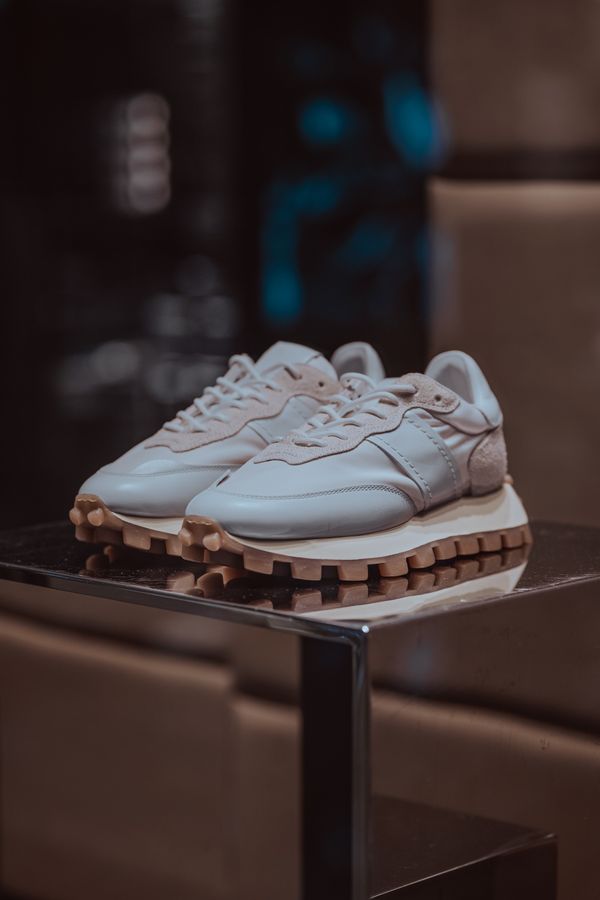
White leather sneakers
Real leather in a low-profile shape — the shoe that spans the wardrobe from chinos to jeans without changing register.
“I wear all-black because I spend my cognitive energy on space and proportion, not on what to put on. But that doesn't mean thoughtless — the turtleneck has to be good merino, the trousers have to break at exactly the right point. Precision carries into the wardrobe.”
— Principal architect, boutique studio
A typical week
How to rotate the wardrobe Monday through Friday without repeating yourself.
Monday
The architecture uniform: monochromatic, considered, no decisions to make before 8 AM.
Tuesday
Studio day: relaxed but the grey-black contrast is intentional.
Wednesday
Client presentation: blazer over turtleneck is the precise architecture meeting formula.
Thursday
Site visit: all-black handles mud and debris without looking visibly destroyed.
Friday
Studio Friday — bomber over all-black for a slightly more relaxed register.
Edge cases
The dress code decisions that trip up most architects.
Client presentation in a traditional corporate client's boardroom
Add the navy blazer over the turtleneck. Even if the client's office is casual, you're delivering a creative recommendation — a blazer frames that as a considered professional judgment, not an opinion.
Construction site walk with the general contractor
Chelsea boots only. Hard-cap requirements aside, your footwear needs to navigate poured concrete, metal rebar, and wet aggregate without being destroyed.
Award ceremony or architecture gala
This is the occasion for the camel overcoat over all-black. It reads quietly exceptional — exactly the signal the architecture world respects.
International studio or firm event
European architecture culture runs more formal than American. A tailored black blazer over a quality turtleneck is appropriate across any design culture context.
Real budget breakdown
Piece-by-piece costs at budget, mid-range, and premium — so you know exactly what you're committing to.
| Piece | Budget | Mid | Premium |
|---|---|---|---|
| Turtleneck (merino) | $50 | $120 | $350 |
| Black tees (×3) | $30 | $70 | $150 |
| Black trousers | $60 | $150 | $400 |
| Grey trousers | $60 | $150 | $400 |
| Black jeans | $50 | $100 | $220 |
| Chelsea boots | $80 | $200 | $600 |
| Navy blazer | $120 | $300 | $900 |
| Bomber jacket | $70 | $160 | $500 |
| Camel overcoat | $150 | $400 | $1500 |
| Leather tote / portfolio | $60 | $150 | $600 |
| Total | $730 | $1800 | $5620 |
What to avoid
- ✕
Fast-fashion black that fades to grey — it undermines the whole exercise
- ✕
Bulky or oversized silhouettes — architecture culture values proportion in everything
- ✕
Athletic or sportswear pieces in the studio environment
- ✕
Bright colours or bold patterns — the wardrobe should recede, not compete with your work
- ✕
Brand-logo anything — design culture is anti-logo
Body in motion
Architects split time between long seated computer sessions and physically active site visits. The studio wardrobe needs to handle both: trousers that sit comfortably for hours of CAD work and Chelsea boots that provide adequate ankle support on uneven construction terrain. Avoid stiff leather-sole dress shoes on construction sites — they provide no ankle protection and mark you as someone who doesn't do site visits seriously.
Early career vs. seasoned
Early career
Start with two pairs of quality black trousers and two black turtlenecks. Uniqlo's merino turtleneck and Theory's black stretch trousers are the entry points that look genuine rather than costume. One pair of quality Chelsea boots. That's the full kit.
Seasoned
A principal architect's wardrobe reflects the practice. A Lemaire or Margaret Howell overcoat, Arket or COS quality merino, and Tricker's or Grenson Chelsea boots — all acquired slowly and worn for years. The investment is in longevity, not volume.
Fabric & care
Black garments fade from heat and agitation — wash inside-out on cold, line dry, and wash with colour-protecting detergent (Woolite Dark or similar). Merino turtlenecks: hand wash or delicate cycle, lay flat to dry — never hang wet. Chelsea boots: clean suede with a suede brush, leather with a damp cloth and conditioner monthly.
What architects complain about
All-black reads as a uniform when every piece is the same quality — mixing textures (matte tee, sheen trouser, brushed Chelsea) is what makes it designed rather than accidental.
Cheap black fabric fades to charcoal grey after a few washes — COS, Theory, and Cos all produce reliably deep-dye black that holds through multiple seasons.
Chelsea boots on construction sites wear out quickly — keep a dedicated pair for site visits and a better pair for client presentations.
See the architects pieces on you before buying
Upload a photo and virtually try on any piece from the architects list before you commit.
1 free try-on · no signup, no card.
Get the architects capsule checklist
Every piece from this architects guide as a printable list, with budget tiers.
No spam. Unsubscribe anytime.
Core piece categories
More capsule wardrobes by profession
Interior Designers
Your wardrobe is your portfolio. Considered, restrained, on-brand.
14 pieces · $900–$2500Flight Attendants
Packs in a rollaboard. Multi-climate ready. Looks put together on zero sleep.
10 pieces · $500–$1200Teachers
Durable, machine-washable, standing-all-day comfortable.
15 pieces · $600–$1400Pharmacists
Clinical credibility. All-day standing comfort. Conservative palette.
14 pieces · $600–$1400Marketing Professionals
Creative, camera-ready, credible. Dress like you understand brand.
15 pieces · $700–$1800Sales Professionals
Dress slightly above your customer. Wrinkle-resistant. Confidence-forward.
15 pieces · $800–$2000Entrepreneurs
Dress for your most important meeting. Signature, not costume.
14 pieces · $800–$2500Nurses
Off-duty ease for people who work the hardest shifts.
12 pieces · $400–$900HR Professionals
Approachable to all levels. Interview-ready always.
15 pieces · $700–$1600