Capsule wardrobe for entrepreneurs
Dress for your most important meeting. Signature, not costume.
What makes this wardrobe different
Not every capsule wardrobe works for every job. An entrepreneur's wardrobe has specific requirements that a generic capsule ignores.
The 4 rules for this wardrobe
Dress for the most important meeting of the day
Check your calendar the night before. Investor meetings mean a blazer. Team standup means clean casual. The capsule must handle both without a full costume change.
Build a signature
The most effective entrepreneurial wardrobes are memorable and consistent — Steve Jobs' turtleneck, Mark Zuckerberg's grey tee. Pick two or three pieces you always reach for and own them in volume.
Camera-ready for press
Unexpected podcast appearances, press photos, and investor demo days happen on short notice. Have one outfit that's fully ready — blazer, quality shirt, clean shoes.
Invest in exactly three things
One incredible blazer that fits perfectly. One pair of trousers or jeans that looks tailored. One pair of shoes that work in every context. Everything else can be affordable basics.
The actual wardrobe
12 real pieces, every one chosen specifically for an entrepreneur. Click any piece to shop on Amazon.

Navy blazer
The unstructured shoulder is the trick: cardigan comfort on the body, suit-jacket credibility in the room.
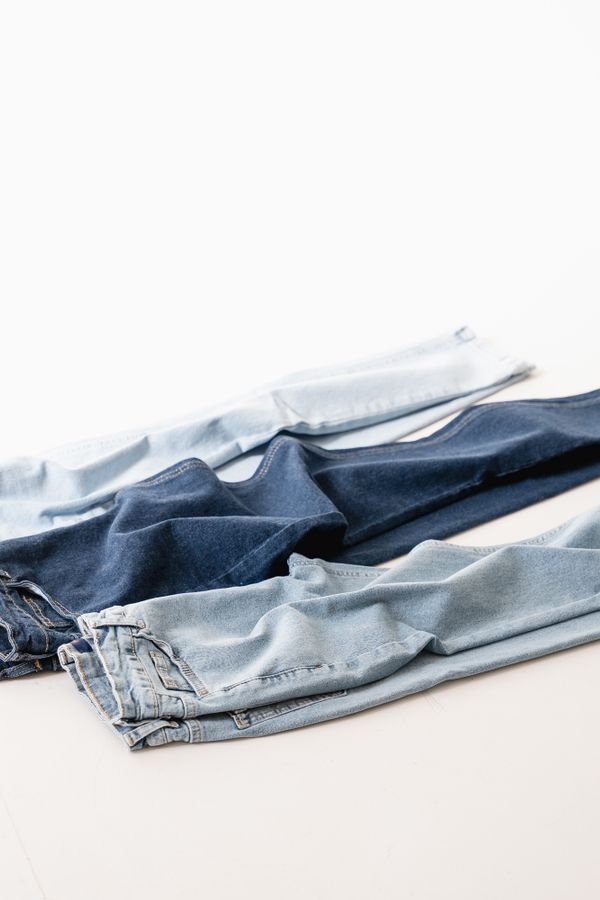
Dark wash jeans
Cut slim rather than skinny, in a dark stonewash that passes at the office on Friday and at the bar an hour later.

White Oxford shirt
No shirt earns its slot harder: under a sweater it layers, into chinos it tucks, over denim it hangs untucked — one garment, three registers.

Black T-shirt
The grown-up alternative when white feels too summery.

White T-shirt
The base layer everything else builds on. Buy three.
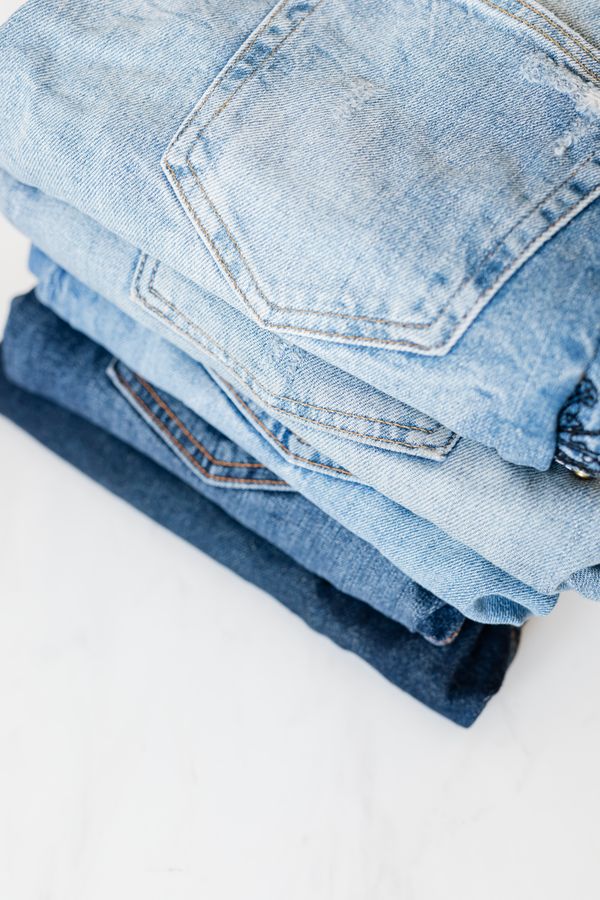
Navy chinos
Nine office days out of ten, these stand in for dress trousers — the slim cut is what keeps the line sharp enough to get away with it.
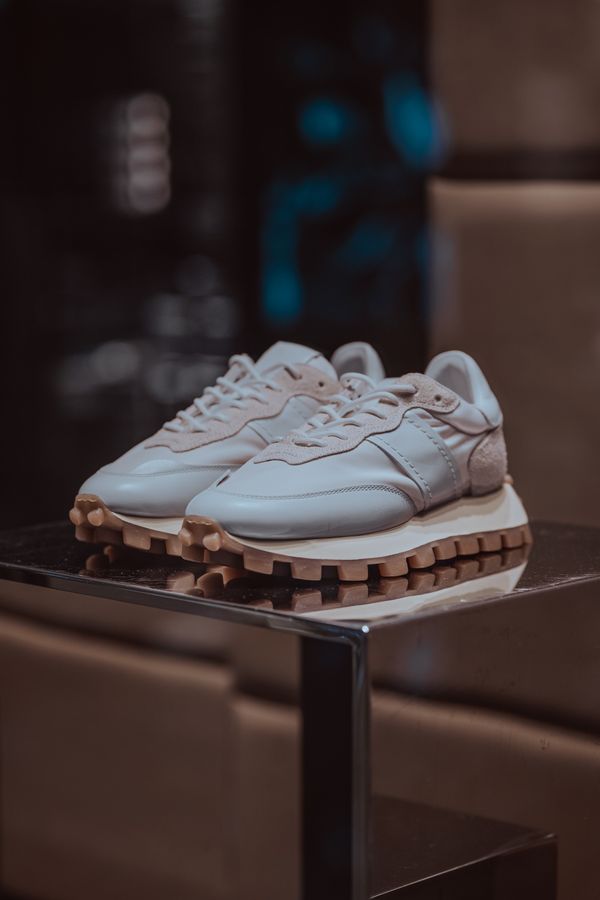
White leather sneakers
Real leather in a low-profile shape — the shoe that spans the wardrobe from chinos to jeans without changing register.

Penny loafers
In tan or burgundy, worn bare-ankled with chinos through summer — the loafer at its natural habitat.

Chelsea boots
In mid-brown suede or leather, it steps from dark denim to wool trousers without breaking stride.
Field watch
38-40mm dial, NATO strap, indiglo.
Leather tote bag
Tan or black. The work-and-weekend hybrid.

Turtleneck sweater
Worn alone or slid under a blazer, the clean roll-neck line reads quietly self-assured without a word of effort.
“I wore the same grey tee and jeans for two years straight. Not because I couldn't afford better — because it was my signal. Consistent, predictable wardrobe communicates that my cognitive energy goes to the problem, not the outfit. But I kept a blazer in the office at all times. The Navy blazer is my cheat code.”
— Founder, Series B startup
A typical week
How to rotate the wardrobe Monday through Friday without repeating yourself.
Monday
Investor meeting: the complete credibility outfit. No improvisation.
Tuesday
Internal team day: your signature casual. Consistent and intentional.
Wednesday
Board or advisor call: turtleneck reads thoughtful and avoids the tie question.
Thursday
Media or press: blazer over black tee is the entrepreneur visual shorthand.
Friday
Same as Tuesday — the signature works. Own it.
Edge cases
The dress code decisions that trip up most entrepreneurs.
Investor pitch (seed, Series A)
The blazer. Full stop. You can be in jeans underneath — investors have seen all of that — but the blazer signals you respect the room and you understand what you're asking for.
Press or podcast appearance
Camera-ready: solid colours, no busy patterns, and a collar if possible. The navy blazer over a quality tee is the canonical founder-on-camera look for a reason.
Enterprise customer meeting (first time)
Business casual at minimum. Enterprise buyers are often in large corporations with dress codes. Showing up in a torn tee reads as immaturity, not confidence.
Team all-hands or company events
Your daily casual is entirely appropriate. The signature matters — if you always wear grey tees, wearing a blazer to the all-hands sends a confusing message.
Real budget breakdown
Piece-by-piece costs at budget, mid-range, and premium — so you know exactly what you're committing to.
| Piece | Budget | Mid | Premium |
|---|---|---|---|
| Navy blazer (the one investment) | $150 | $400 | $1500 |
| Dark jeans (×2) | $80 | $180 | $400 |
| Navy chinos | $45 | $100 | $200 |
| Quality tees (×5) | $75 | $150 | $350 |
| Turtleneck | $55 | $130 | $350 |
| White sneakers | $70 | $140 | $400 |
| Loafers | $90 | $200 | $600 |
| Field watch | $100 | $300 | $2000 |
| Leather tote | $60 | $150 | $600 |
| Total | $725 | $1750 | $6400 |
What to avoid
- ✕
Company-branded merchandise in investor or press contexts — you are not an employee of your own company
- ✕
Athletic wear in any client-facing or investor-facing meeting, regardless of how casual your culture
- ✕
An ill-fitting blazer — this is more harmful than no blazer
- ✕
Novelty or graphic tees in professional contexts
Body in motion
Entrepreneurs are constantly in motion — planes, cars, offices, pitch rooms, coffee shops. The wardrobe must travel without complaint. Dark jeans with 1-2% stretch are the founder's essential: they survive everything from an eight-hour flight to a standing pitch to a team dinner without discomfort or losing their shape.
Early career vs. seasoned
Early career
Pre-product founder: buy one blazer that fits perfectly. Everything else can be cheap. The blazer is how you close the credibility gap before revenue exists. Quality tees and one good pair of dark jeans are sufficient for the rest.
Seasoned
Post-Series A: you've earned the right to a signature. Invest in one exceptional piece — a Canali blazer, a made-to-measure shirt, a quality watch. The rest stays simple. Complexity is for people who don't have a company to build.
Fabric & care
Quality tees: cold wash, hang dry — the core signature piece should be treated carefully. Navy blazer: keep cedar hanging blocks in the closet to deter moths; dry clean twice per year maximum; brush lapels with a soft brush weekly. Dark jeans: cold wash inside-out monthly; the indigo holds better when washed infrequently.
What entrepreneurs complain about
Owning 'a blazer' that doesn't fit — an ill-fitting blazer is worse than no blazer. The shoulder seam must sit at the edge of the shoulder. Get it altered.
White tees that yellow from deodorant — use a clinical-strength deodorant to prevent pit stains, or switch to grey or navy tees for darker blazer combinations.
Confusing 'signature' with 'uniform' — the signature should be your best version of a look, not the laziest version repeated.
Preview this entrepreneurs capsule on your own photo
Upload a photo and virtually try on any piece from the entrepreneurs list before you commit.
1 free try-on · no signup, no card.
Get the entrepreneurs capsule checklist
Every piece from this entrepreneurs guide as a printable list, with budget tiers.
No spam. Unsubscribe anytime.
Core piece categories
More capsule wardrobes by profession
Journalists
Credible everywhere. Camera-ready always. Packs in a carry-on.
13 pieces · $600–$1600Nurses
Off-duty ease for people who work the hardest shifts.
12 pieces · $400–$900Physical Therapists
Active, clinical, and patient-trusted. Moves with you through every session.
13 pieces · $600–$1400HR Professionals
Approachable to all levels. Interview-ready always.
15 pieces · $700–$1600Social Workers
Approachable. Practical. Budget-smart. Built for field and office.
13 pieces · $400–$900Consultants
Carry-on only. Client-ready in any city. Merino-first.
16 pieces · $1500–$4000Real Estate Agents
Client-ready and mobile. Professional but never stiff.
16 pieces · $800–$2000Public Accountants (CPA)
Big 4-ready. Audit-travel efficient. Conservative and trusted.
18 pieces · $1500–$4000Nursing Assistants (CNA)
Easy, washable, and actually comfortable after a 12-hour shift.
10 pieces · $250–$600