Navy peacoat with Turtleneck sweater— a women's outfit
For women — the navy peacoat with the turtleneck sweater: a weekend pairing that holds together on color, proportion, and formality at once. Here's how to wear it — and what to buy.
Works for: weekend, smart-casual · Price range: $35–$1330
Why it works
Two pieces, multiple occasions. The navy peacoat brings naval heritage in heavy melton wool. The turtleneck sweater answers it — solo or under a blazer — the silhouette quietly communicates confidence. Black or white against navy, charcoal, or slate is the cleanest contrast a wardrobe can produce — the cool undertones agree without competing, and it flatters in any light.
Smart-casual sweet spot. Reads put-together at a restaurant, fine in most modern offices, never overdressed at a weekend event.
Color theory
Black or white against navy, charcoal, or slate is the cleanest contrast a wardrobe can produce — the cool undertones agree without competing, and it flatters in any light.

How to wear it
Where this works
The navy peacoat + turtleneck sweater combination reads weekend. It also stretches to smart-casual without changing a thing. Smart-casual sweet spot. Reads put-together at a restaurant, fine in most modern offices, never overdressed at a weekend event.
Get the proportions right
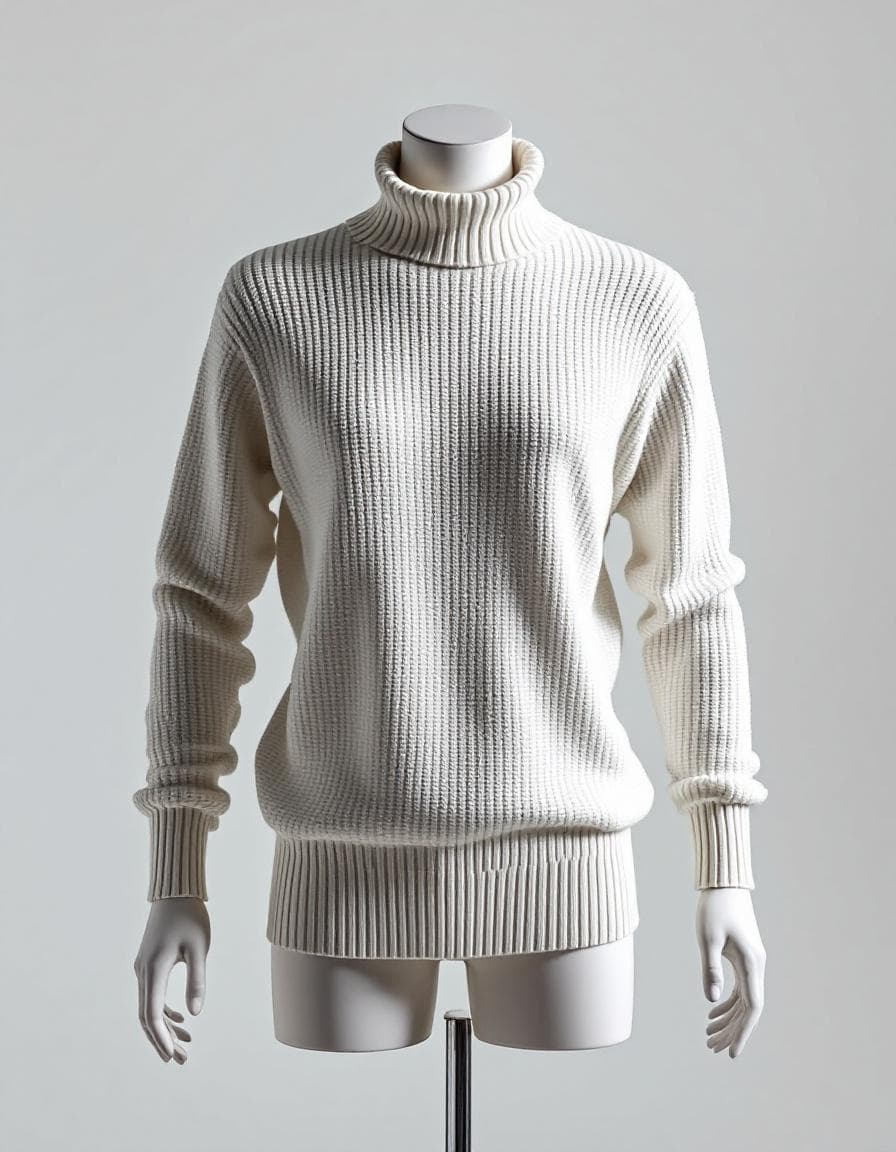
Trim shoulder with room for a knit; sleeve at the wristbone; hip length preserves the leg line — or go longer and treat it as a bridge coat over slim bottoms. For the turtleneck sweater: fine-gauge and close to the body — the layering piece under blazers, slip dresses, and pinafores; the fold sits just under the jaw.
Why the colours work
Black or white against navy, charcoal, or slate is the cleanest contrast a wardrobe can produce — the cool undertones agree without competing, and it flatters in any light.
When to wear it
A cold-weather combination — works through fall, winter. The fabric weights are doing the heavy lifting; layer accordingly.
What goes on your feet
For weekend, white sneakers or flat ankle boots — keep the silhouette low. Anything heavier than this combination of pieces will weigh down the outfit.
Caring for both pieces
The turtleneck sweater is the more delicate of the two — handle accordingly. The navy peacoat can take more wear but still benefits from cold-water washes and air drying. Rotation matters: never wear either piece on consecutive days.
Dos and don'ts
Do
- Insist on 24oz+ melton wool
- Balance the double-breasted bulk with slim or cropped bottoms
- Pop the collar against wind, not for style
- Layer under slip dresses and pinafores
Don't
- Belting it — it's not a wrap coat
- Wearing it open over bulky knits — the buttons exist
- Thin 'fashion peacoats' that pill by February
- Necklaces over the roll — kills the clean line
Who this is for
The navy peacoat-and-turtleneck sweater pairing is for women who want their off-duty clothes to still look considered. It flatters most shapes because it's structured without being severe — define one point, the waist or a tucked layer, and let the rest skim. Proportion does more here than size. Here the navy peacoat does the structural work, so whatever sits under it can stay simple. Best once you've reached the point where 'I just threw this on' should actually mean it.
Complete the outfit
Two pieces is the minimum. These third pieces — drawn from items both halves of this outfit pair well with — turn it into a full look.
footwear
Chelsea boots
Anchors the outfit at the floor — the elastic gusset should sit flat against the ankle.
accessories
Leather belt
Quiet accent that ties neutral cool and monochrome together.
bottoms
Grey wool trousers
Earns a place because both pieces in this outfit pair well with it independently.
Dress it up, dress it down
Dress up
Lean on the navy peacoat already here and add a fine-gauge knit or a silk layer underneath, and finish on heeled boots or sleek loafers. That lifts the pairing a grade into any smart-casual room.
Dress down
Soften the navy peacoat — untuck, lose any tie or structured layer — and drop to clean white sneakers. The same two pieces read weekend without losing the line.
Seasonal swaps
A cold-weather combination — works through fall, winter. The fabric weights are doing the heavy lifting; layer accordingly.
For colder weather
Swap to Camel overcoat
Heavier construction (heavyweight) suited to fall/winter. The rest of the outfit holds.
Common mistakes
With the navy peacoat:
Sizing up for an 'oversized' peacoat — the double-breasted front already adds width; oversizing swamps the shoulder and loses the naval line.
With the turtleneck sweater:
Reaching for a chunky roll-neck for layering jobs — under a blazer or dress only fine-gauge merino keeps the line; save the chunky knit for standalone wear.
A short history
outerwear
Navy peacoat
Originated as Dutch naval uniform in the 18th century — 'pijjekker' (pea + jacket). Adopted by the US Navy in 1881 in 30oz melton wool. Schott NYC's Boatswain peacoat is the civilian reference.
Naval heritage in heavy melton wool. Double-breasted, six anchor buttons, broad lapel. Warmer than a topcoat, more characterful than a parka.
tops
Turtleneck sweater
Worn by 19th-century European fishermen, then redefined for the cultural elite by Audrey Hepburn (Funny Face, 1957) and Steve Jobs (every keynote, 1998–2011).
Solo or under a blazer — the silhouette quietly communicates confidence.
Common questions
Does a navy peacoat go with a turtleneck sweater?
Yes. Both pieces sit in the neutral-to-earth range, so the colours never fight — it's one of the safer pairings you can build. It lands in smart-casual territory — polished without being stuffy.
What shoes go with a navy peacoat and a turtleneck sweater?
Chelsea boots finish it cleanly — leather keeps the register up. To take it from two pieces to a full outfit, add a leather belt or grey wool trousers.
Can you wear a navy peacoat with a turtleneck sweater to the office?
In a modern or relaxed office, yes, as is. For anywhere stricter, add a structured blazer or tailored layer and swap to leather shoes and it moves up a grade.
See this outfit on you
Upload a photo and try on the navy peacoat or turtleneck sweater virtually. Photorealistic results in under 10 seconds.
1 free try-on · no signup, no card.
Get your free capsule wardrobe checklist
30 essential pieces. Every outfit combination. Delivered to your inbox.
No spam. Unsubscribe anytime.
More navy peacoat outfits
Dark wash jeans with Navy peacoat
weekend, smart-casual
View outfitBlack jeans with Navy peacoat
weekend, smart-casual
View outfitKhaki chinos with Navy peacoat
weekend, smart-casual
View outfitMidi skirt with Navy peacoat
weekend, smart-casual
View outfitNavy peacoat with Wide-leg trousers
smart-casual
View outfitNavy peacoat with White leather sneakers
weekend, smart-casual
View outfitBlack leather sneakers with Navy peacoat
weekend, smart-casual
View outfitChelsea boots with Navy peacoat
smart-casual, weekend
View outfitMore turtleneck sweater outfits
Turtleneck sweater with Knit cardigan
smart-casual
View outfitDark wash jeans with Turtleneck sweater
weekend, smart-casual
View outfitBlack jeans with Turtleneck sweater
weekend, smart-casual
View outfitKhaki chinos with Turtleneck sweater
weekend, smart-casual
View outfitGrey wool trousers with Turtleneck sweater
work
View outfitBlack trousers with Turtleneck sweater
work
View outfitMidi skirt with Turtleneck sweater
work, weekend, smart-casual
View outfitBlack pencil skirt with Turtleneck sweater
work
View outfit