Khaki chinos with Navy peacoat— a men's outfit
For men — the khaki chinos with the navy peacoat: a weekend pairing that holds together on color, proportion, and formality at once. Here's how to wear it — and what to buy.
Works for: weekend, smart-casual · Price range: $28–$1280
Why it works
Two pieces, multiple occasions. The khaki chinos brings the warm-weather workhorse. The navy peacoat answers it — naval heritage in heavy melton wool. Cool meets warm — navy against camel, charcoal against ecru — is the most flattering cross-tonal pairing in the wardrobe.
Smart-casual sweet spot. Reads put-together at a restaurant, fine in most modern offices, never overdressed at a weekend event.
Color theory
Cool meets warm — navy against camel, charcoal against ecru — is the most flattering cross-tonal pairing in the wardrobe. The warm neutral softens the cool one; the cool neutral grounds the warm one. It works on every skin tone.

How to wear it
Where this works
The khaki chinos + navy peacoat combination reads weekend. It also stretches to smart-casual without changing a thing. Smart-casual sweet spot. Reads put-together at a restaurant, fine in most modern offices, never overdressed at a weekend event.
Get the proportions right
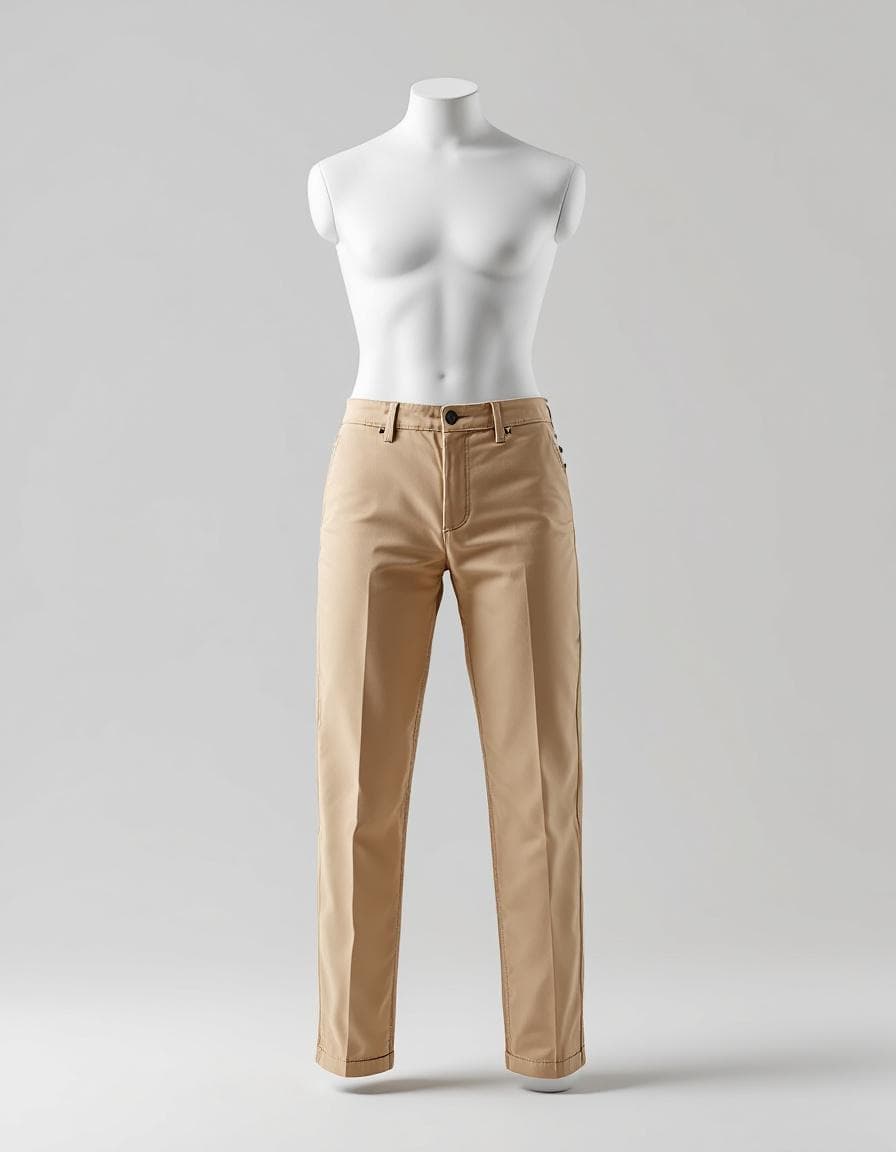
Slim but not skinny; the leg should fall straight from the knee with the hem just brushing the shoe. For the navy peacoat: trim through the body with room for a sweater layer; sleeve hits the wristbone; length to the high hip (true peacoat) or mid-thigh (bridge coat).
Why the colours work
Cool meets warm — navy against camel, charcoal against ecru — is the most flattering cross-tonal pairing in the wardrobe. The warm neutral softens the cool one; the cool neutral grounds the warm one. It works on every skin tone.
When to wear it
The shared seasonal window is fall. Best worn when both fabrics feel natural — too early in spring or too late in autumn pushes one or the other out of context.
What goes on your feet
For weekend, white sneakers or brown loafers — keep the silhouette low. Anything heavier than this combination of pieces will weigh down the outfit.
Caring for both pieces
The khaki chinos is the more delicate of the two — handle accordingly. The navy peacoat can take more wear but still benefits from cold-water washes and air drying. Rotation matters: never wear either piece on consecutive days.
Dos and don'ts
Do
- Pair with navy on top, every time
- Hem to a clean break
- Choose stone or true khaki, never bright tan
- Choose 24oz+ melton wool
Don't
- Wear in the dead of winter — looks tonally off
- Pair with white socks
- Combine with cargo pockets — kills the silhouette
- Don't pair with shorts — peacoat is a cold-weather piece, period
Who this is for
The khaki chinos-and-navy peacoat pairing is for men who want their off-duty clothes to still look considered. It forgives a less-than-perfect fit because the casual register lets fabric and proportion carry it — but a tapered bottom keeps it from reading lazy. Here the navy peacoat does the structural work, so whatever sits under it can stay simple. Twenties through forties is the sweet spot.
Complete the outfit
Two pieces is the minimum. These third pieces — drawn from items both halves of this outfit pair well with — turn it into a full look.
tops
White Oxford shirt
Swap into the top slot when you want a different mood while keeping the bottom and shoe constant.
footwear
Penny loafers
Anchors the outfit at the floor — should grip the heel without slipping.
footwear
Chelsea boots
Anchors the outfit at the floor — the elastic gusset should sit flat against the ankle.
Dress it up, dress it down
Dress up
Lean on the navy peacoat already here and add a tie or a pocket square, and finish on leather loafers or Chelsea boots. That lifts the pairing a grade into any smart-casual room.
Dress down
Drop to clean leather sneakers, throw a hoodie or chunky knit over the top, and you're at coffee-shop casual. Same pairing, dial turned down.
Seasonal swaps
The shared seasonal window is fall. Best worn when both fabrics feel natural — too early in spring or too late in autumn pushes one or the other out of context.
For warmer weather
Swap to Casual shorts
Lighter fabric weight (lightweight) and the right seasonal cut for summer wear. Keep the navy peacoat as-is.
For colder weather
Swap to Raw denim jeans
Heavier construction (heavyweight) suited to fall/winter/spring. The rest of the outfit holds.
Common mistakes
With the khaki chinos:
Picking 'tan' or 'sand' that's actually orange — true khaki is a muted green-brown.
With the navy peacoat:
Choosing a lightweight peacoat. The whole point is heavy melton (24oz+) — anything lighter is a peacoat costume, not a peacoat.
A short history
bottoms
Khaki chinos
U.S. Army officers wore khaki cotton drill from 1898 onwards; J. Press and the Ivy League adopted it as off-duty wear in the 1950s.
The warm-weather workhorse. Sand, beige, or stone — anything but bright tan.
outerwear
Navy peacoat
Originated as Dutch naval uniform in the 18th century — 'pijjekker' (pea + jacket). Adopted by the US Navy in 1881 in 30oz melton wool. Schott NYC's Boatswain peacoat is the civilian reference.
Naval heritage in heavy melton wool. Double-breasted, six anchor buttons, broad lapel. Warmer than a topcoat, more characterful than a parka.
Common questions
Do khaki chinos go with a navy peacoat?
Yes. Both pieces sit in the neutral-to-earth range, so the colours never fight — it's one of the safer pairings you can build. It reads relaxed and weekend-ready.
What shoes go with khaki chinos and a navy peacoat?
Penny loafers finish it cleanly — a low, clean shoe keeps it easy. To take it from two pieces to a full outfit, add a white oxford shirt or chelsea boots.
Can you wear khaki chinos with a navy peacoat to the office?
In a modern or relaxed office, yes, as is. For anywhere stricter, add a structured blazer and swap to leather shoes and it moves up a grade.
See this outfit on you
Upload a photo and try on the khaki chinos or navy peacoat virtually. Photorealistic results in under 10 seconds.
1 free try-on · no signup, no card.
Get your free capsule wardrobe checklist
30 essential pieces. Every outfit combination. Delivered to your inbox.
No spam. Unsubscribe anytime.
More khaki chinos outfits
Khaki chinos with White Oxford shirt
weekend, smart-casual
View outfitKhaki chinos with Light blue Oxford shirt
smart-casual
View outfitKhaki chinos with Navy crewneck sweater
weekend, smart-casual
View outfitKhaki chinos with Striped Breton shirt
weekend, smart-casual
View outfitKhaki chinos with Polo shirt
weekend, smart-casual
View outfitDenim shirt with Khaki chinos
weekend, smart-casual
View outfitCardigan with Khaki chinos
weekend, smart-casual
View outfitKhaki chinos with Turtleneck sweater
weekend, smart-casual
View outfitMore navy peacoat outfits
Navy peacoat with White leather sneakers
weekend, smart-casual
View outfitBlack leather sneakers with Navy peacoat
weekend, smart-casual
View outfitChelsea boots with Navy peacoat
smart-casual, weekend
View outfitBrown leather Derbies with Navy peacoat
smart-casual
View outfitPenny loafers with Navy peacoat
smart-casual
View outfitNavy peacoat with Rugby shirt
weekend, smart-casual
View outfitLinen shirt with Navy peacoat
weekend, smart-casual
View outfitHeavyweight crewneck sweatshirt with Navy peacoat
weekend
View outfit